Exploring Romance in Pageant Magazine
By D.E Johnson
Romance: A Timeless Theme
Romance has always been a captivating subject. Our magazine features stories that evoke emotion and connection.
Stories to Cherish
From classic tales to modern interpretations, find romance that speaks to you.
Part I — Romance in the Original Pageant
When Pageant launched in 1944, it occupied a unique editorial space in American publishing. Unlike pulp romance magazines that focused almost exclusively on fiction, Pageant blended journalism, human-interest features, cultural commentary, and short narrative pieces into a digest format meant to be read quickly but remembered long after. Romance appeared throughout the magazine, but it was usually framed as a lens through which to explore modern life rather than as pure escapist storytelling.
One of the hallmarks of Pageant’s treatment of romance was its grounded realism. Articles often explored relationships within the broader context of post-war American society. During the late 1940s and 1950s, pieces frequently addressed subjects like marriage after military service, the challenges of long-distance relationships, and the shifting expectations of women entering the workforce. Romance was not presented as fantasy alone, it was intertwined with real social change.
The magazine also had a reputation for first-person romantic narratives. Many stories were written in memoir-style voices, recounting unusual courtships, surprising reunions, or moments when love appeared in unexpected places. These narratives carried an intimate tone that made readers feel as though they were hearing a personal confession rather than reading a polished piece of fiction.
Another important element was Pageant’s emphasis on human connection and emotional insight. The magazine often published interviews or profiles that revealed the romantic lives of public figures, actors, musicians, writers, or ordinary citizens whose stories captured the imagination of readers. These pieces explored the psychology of attraction, heartbreak, loyalty, and longing.
Visually, romance in Pageant was often accompanied by glamour photography or elegant illustration. Couples strolling through city streets, quiet moments in cafés, or wistful portraits of individuals lost in thought were common motifs. The aesthetic echoed mid-century cinema: soft lighting, poised elegance, and an atmosphere suggesting that romance might be waiting just around the corner.
Perhaps most importantly, Pageant treated romance as part of the broader drama of everyday life. Love stories existed alongside articles about crime, music, politics, and travel. This editorial mix reinforced the idea that romance was not separate from life’s other adventures, it was one of the forces that shaped them.
In that spirit, modern explorations of romance in Pageant continue the tradition: stories that blend atmosphere, character, and a touch of mystery about how two lives might intersect.
Part II — Romance Story Teaser
“A Song for the Last Train”
The night train from Reno pulled into Wickenburg just after midnight.
Elena Marquez stepped down onto the platform with a single suitcase and the uneasy feeling that she might be making a terrible mistake. The desert wind carried the faint smell of creosote and dust, and somewhere down the street a trumpet played a lonely blues line that drifted through the warm Nevada night.
She had come to Wickenburg to forget someone.
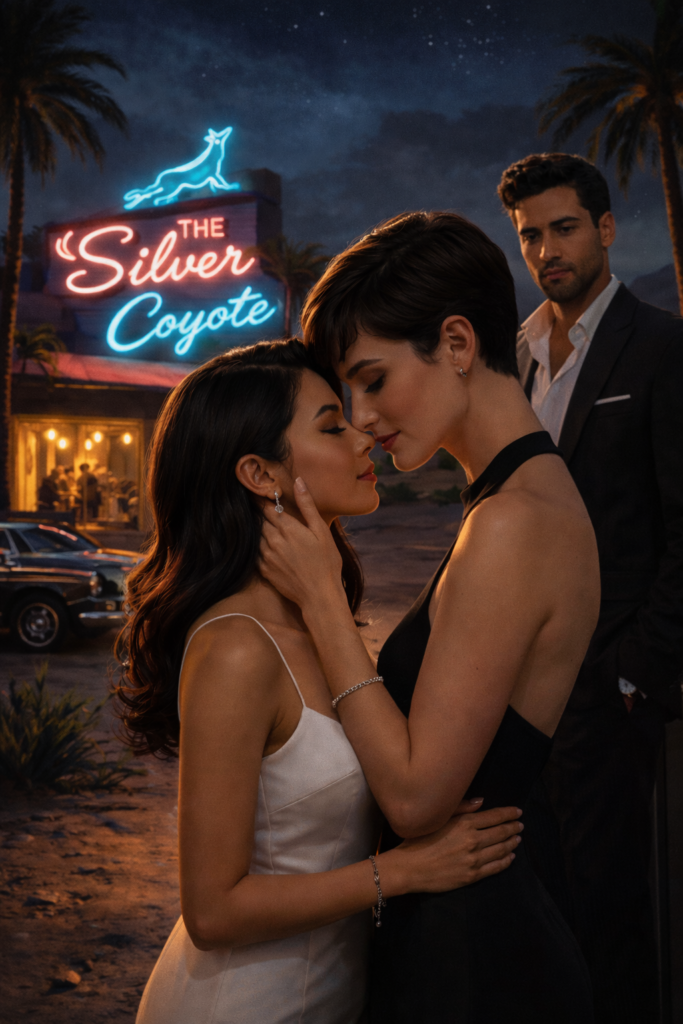
Instead, she found the Silver Coyote.
The club glowed like a small constellation against the dark street. Inside, smoke curled lazily beneath amber lights while a singer stood at the microphone, his voice deep and velvet-smooth. The band behind him moved through a slow jazz arrangement that seemed older than the room itself.
Elena slipped into a seat near the back.
The singer noticed her almost immediately, the upright bass player saw Elena a fleeting moment later.
The singer, Leigh Maiden, was a woman with the quiet confidence of someone who had seen half the world and sung about the other half. When she sang the final verse of her song, her gaze settled on Elena as though she were the only person in the room.
The gaze of the man playing the bass, Elena would later learn, was Gabriel Stone, a man with an intense demeanor and decorated skin where it wasn’t covered by his shirt. At that moment, Gabriel noted Leigh’s gaze locked on Elena and Elena on Leigh. He smiled a slightly crooked smile.
After the applause faded, Leigh and Gabriel approached Lena’s table.
“You look like someone who just stepped off a train,” Gabriel said with a his crooked smile.
“I did.”
“Running from something?” Leigh guessed.
Elena hesitated.
“Maybe,” she admitted.
“Then you should let me and Gabriel by you a drink and you can tell us your story,” purred Leigh.
Gabriel nodded thoughtfully, as if he understood more than Leigh had said.
“Well,” he said, glancing toward the stage, “you picked the right place to land. Around here, people come for the music. But sometimes they stay for the stories.”
Outside, the desert wind stirred the neon sign above the door. Inside the Silver Coyote, a new song began. None of the three yet realized that before the week was over, Wickenburg would give them a story neither of them expected and a romance none of them had planned.