Resilience in Uncertain Times

By A-M Mawhiney
In February 2026 I had a conversation with podcaster Kino Isaac about the challenges of livingin uncertain times. It was an important conversation shaped by what is occurring in the world. In times of turmoil or disaster, it is difficult to know what we each can do when faced with something overwhelming.
Kino Isaac asked what had happen to reconnect in a world that is so divided.
It was such a big question I must admit I mentally wobbled just for a second. Then I thought about the nature of resilience and how the very act of reaching out to others, even those who think differently, gives us a way forward. My ideas, germinated during the podcast, since haveevolved into strategies that can foster individual and collective resilience.
There are four principles I find useful when dealing with change. I learned these from my own community, Sudbury, Ontario Canada, a mining community that, by the 1960s, had become an environmental wasteland devastated by over a hundred years of acid rain which destroyed our landscape, killed once vibrant lakes, and polluted the air we breathed.
There are four principles I find useful when dealing with change. These principles are based on Sudbury’s re-greening project and shape also my creative writing. As Kino Isaac commented about me, in writing my books, I create the kind of worlds where I want to live. And we can do this in our own communities as well.

A first principle is that in times of disaster we need to work together with the intent of finding a way forward.
In the late 1970s, fortunately, a group of community leaders from the mining unions and companies, local businesses, change agents, recently laid-off miners, researchers from the local university, political and social leaders, educators, every-day citizens and climate activists mapped out a long-term project to re-green our landscape and rehabilitate local lakes and air quality. When they called on the whole community to participate in little and big ways, working together toward a common vision, a significant number of community members from all walks of life volunteered.
A second principle is that meaningful change may take time, not mere weeks or months, but even years. Pretending one hundred years of pollution and water, air, and land degradation could be rectified in the short-term would have meant failure. If you want meaningful change, figure out together what to change and begin with small steps.
The first step in the re-greening project was to neutralize the acid across the lands and waters by using lime to build a healthy foundation that could support tree planting and revitalize lakes. School-aged children, laid-off miners receiving government support, and many others distributedlime throughout designated areas, transforming blackened, bare rocks into healthy soil. Then it was time to plant trees which relied, again, on many people from every part of the community. We knew it would take 30-40 years to re-green the landscape even with fast-growing trees.
A third principle is that it takes creativity and determination to see the long-view and work indefatigably toward it. People need to work together, which means changing individual and collective behaviours. It’s also important to keep track of progress and be adept at adjusting when things don’t work out.
In Sudbury, mining companies needed to create sustainable practices to process nickel and copper while retaining profitability. Unions needed to push for healthier working conditions and higher industry standards, and political leaders at all levels changed policies, laws, and standards to ensure accountability in resource extraction processes.
Citizens of all ages participated in the implementation of the re-greening. We learned that community-based engagement by individuals, small groups, and institutions required working and learning together. Even groups that, by their very nature, had long-standing adversarial relationships collaborated effectively on this project, building connections, respecting what each person contributed, and finding common ground in a dire situation.

A fourth principle is that small actions by many committed individuals and groups has alarge impact, and the more people who join, the greater is the opportunity for significant change.
Take time to think about what concrete actions you can take to begin making a difference in your neighbourhood, community and beyond. Start small. Look around your neighbourhood or community and ask what could make it better, safer, kinder, with a stronger sense of community attachment. Initiate conversations, encourage everyone’s opinions. Diversity of ideas fosters creative solutions. Begin working together. Small ideas over time can be transformative when they foster new ways forward that create spaces and practices where everyone and everything can thrive.
If you have a larger platform, think of ways you can use it to inspire more people to make positive changes that benefit everyone.
History has shown that when people pull together from a place of respect, supporting each other,and including everyone, the fabric of the community remains cohesive and stable.
How do we each become more resilient? I believe it requires people to step out of their routine and comfort zone and take meaningful actions with others to build a strong, supportive community, forging connections instead of divisions.
After all, don’t most of us dream of a world where people feel safe and can enjoy a fulfilling life with meaning and dignity?
Anne-Marie Mawhiney
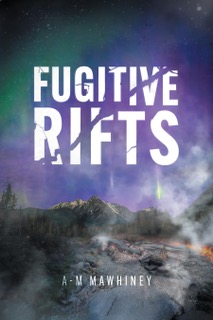
Author, Fugitive Rifts
Biography:
A-M Mawhiney
At age eight A-M Mawhiney announced she wanted to be an author. It only took sixty years. Her career, first as a social worker and then as a university professor and senior administrator, ended with her retirement in 2018. She began writing again during the first lockdown in 2020. To her surprise she found herself writing her first novel, Spindrifts. which was a finalist in the 8th annual Rakuten Kobo Emerging Writers’ Prize and shortlisted for the Whistler Independent Book Awards in 2022. Its sequel, Spelldrifts, was released in 2023, and her latest book, Fugitive Rifts,was published in July 2025. When she isn’t writing A-M enjoys reading, taking in local basketball games, time with family and friends, and travelling. She lives in Sudbury, Ontario with her partner Dave.